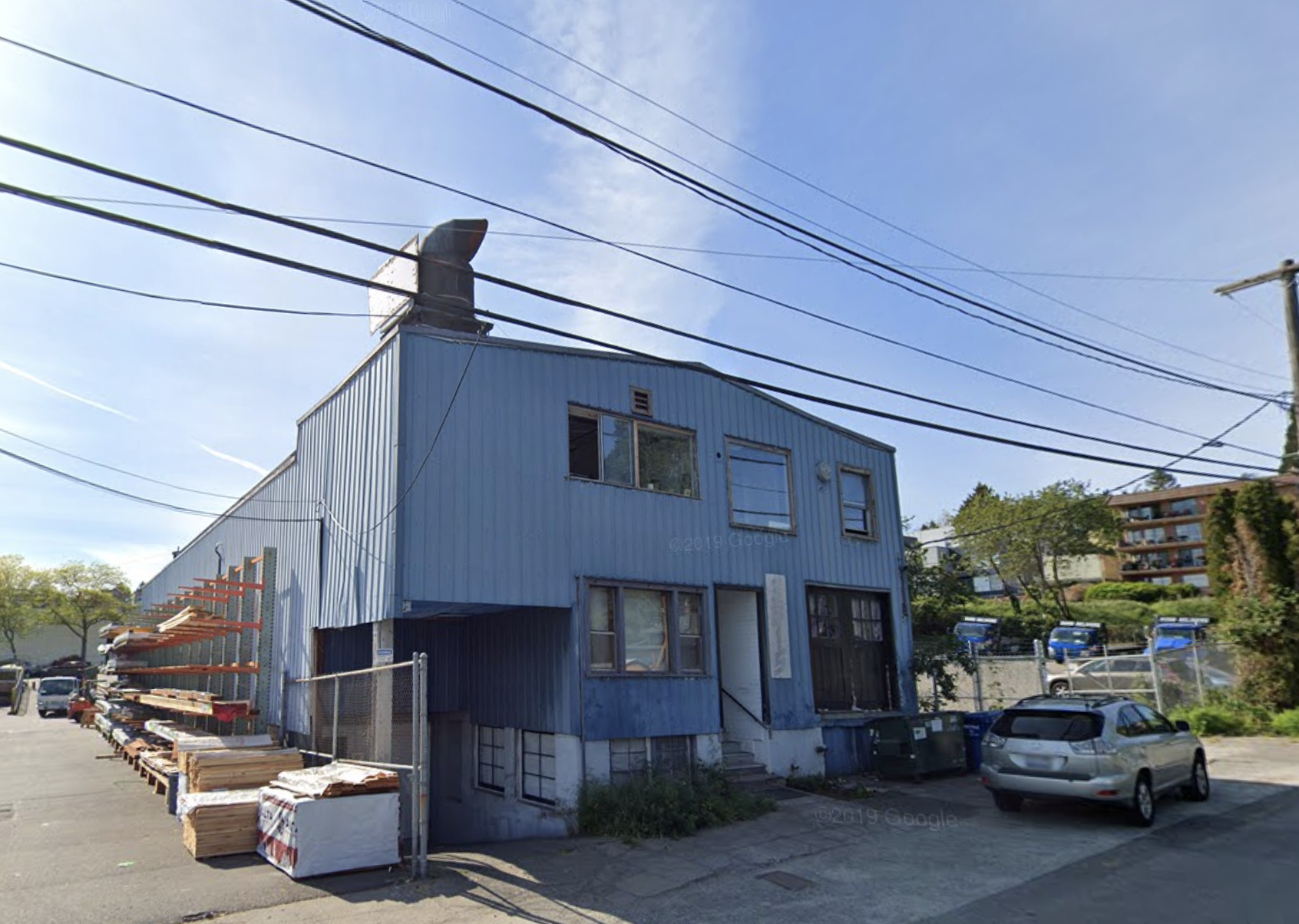
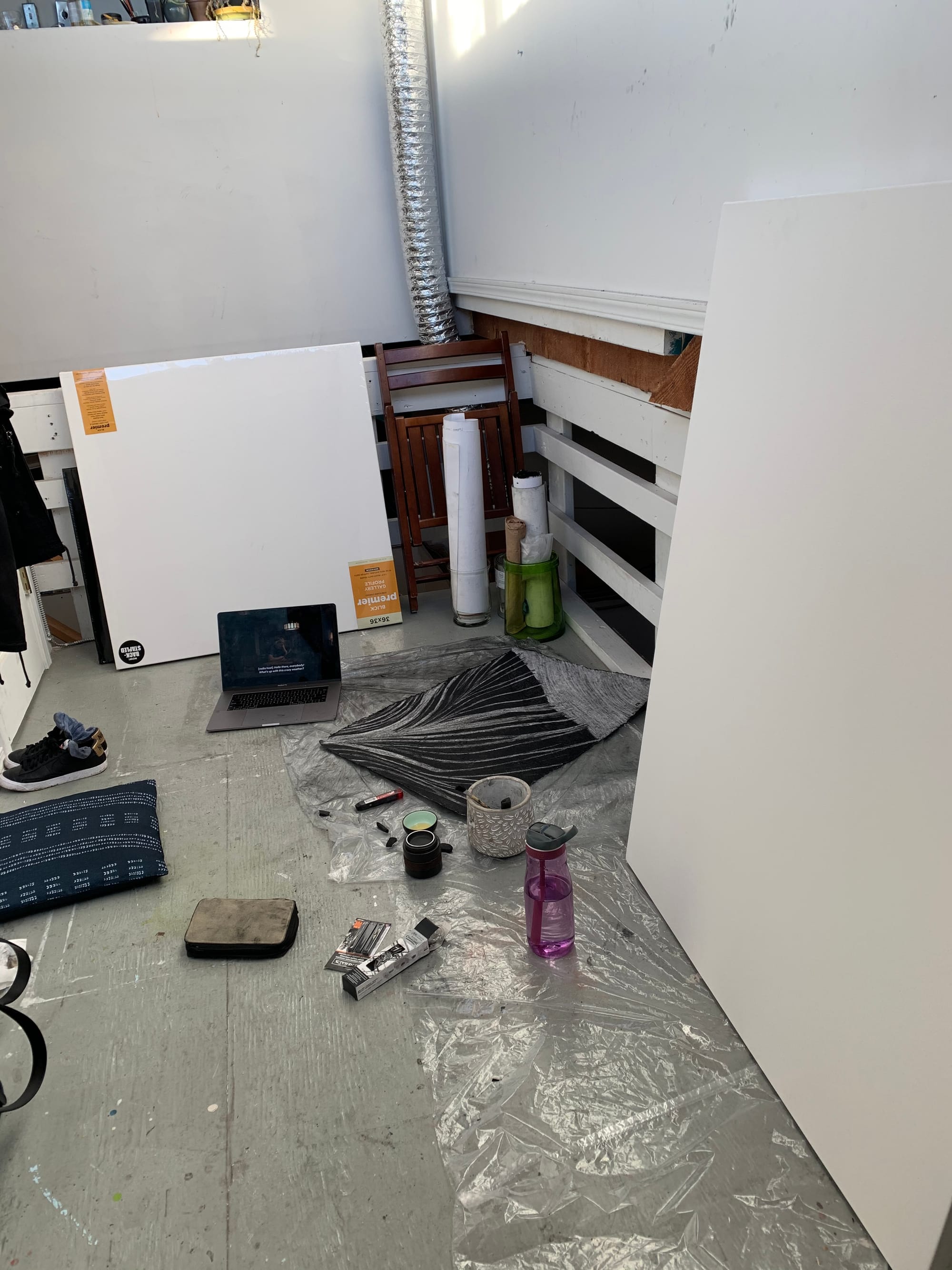
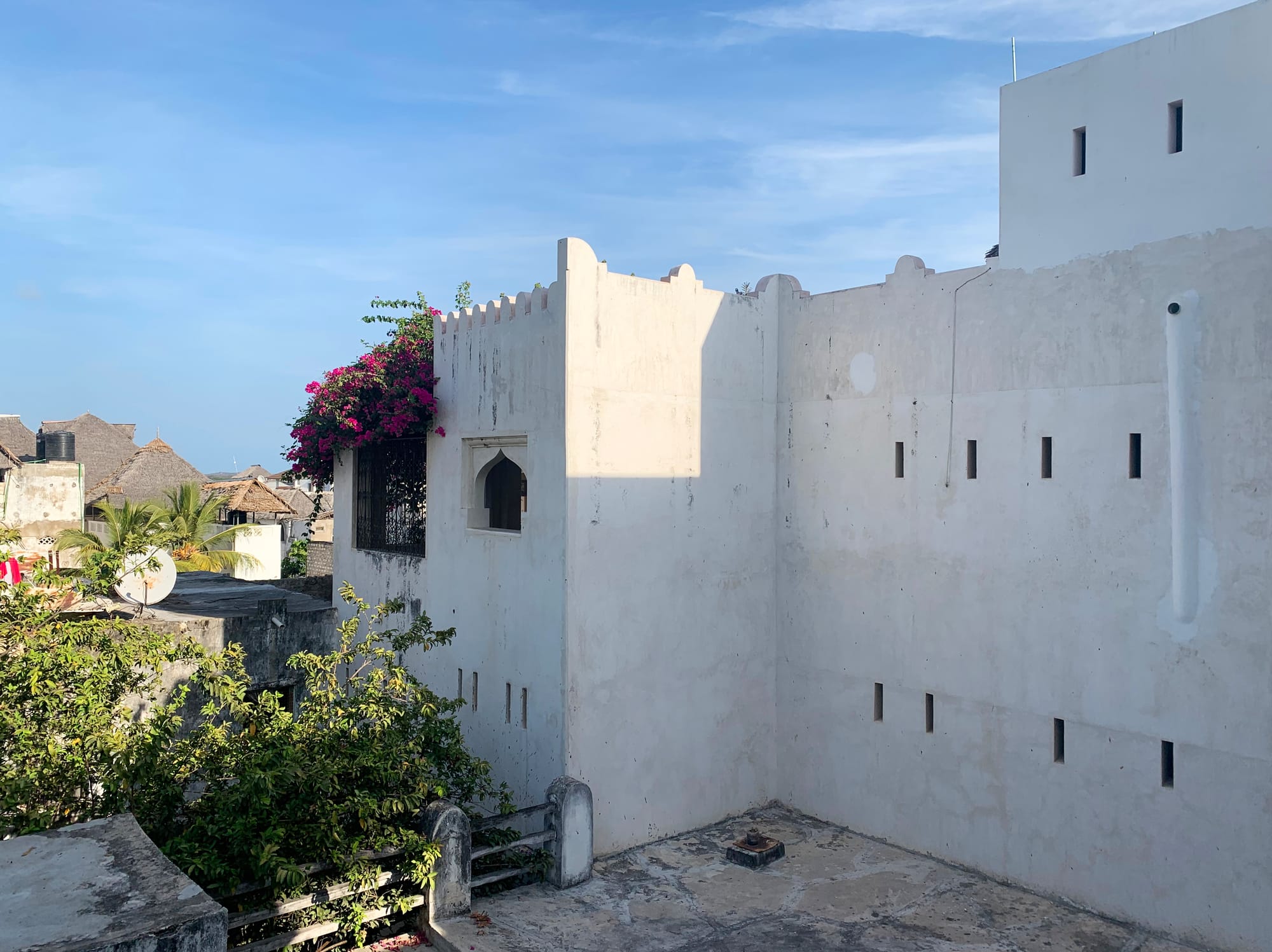
My first “real” art studio was in a refurbished warehouse of a lumber yard. Before then, I mostly worked at home or shared spaces that were part of art schools or communities. I had moved to Seattle the previous year, and during the transition, I had to leave most of my artwork (and belongings) behind. I carved out moments of creativity amidst my chaotic life, but I was eager to establish a more consistent art practice. I thought having a dedicated workspace would help.
I eventually reached a point where I had the time and resources to get a designated space for art. I was in the midst of a coding boot camp and interning as a software engineer. My internship was brutal and overwhelming because of all the things I had to learn and adjust to. I was living in a not-so-ideal environment at home where I couldn't rest and be myself. I didn’t like being there and the studio became my second home. I walked there after my job, worked till the evening, and went home to bed. Even though everything else in my life felt challenging, the space gave me a place to create and be. I also got consistency, and I’m really grateful for that.
I searched online for art studios near my work or home. I found one that was a twelve-minute walk from my work and signed up on the waitlist. I was not expecting to hear back anytime soon, but they eventually reached out about available units for rent. I went to see the space with a friend, and we were met by the building manager. He seemed guarded at first. I assured him with the email invitation and showed him images of my artwork, that seemed to loosen him up a bit. Security appeared to be a priority; there were signs reminding tenants to lock up after themselves and not to let strangers in. Later on, though, I realized that those rules didn’t necessarily apply to everyone. Sometimes the rules loosened, depending on the demographic of the person visiting. That was disappointing to observe, especially since I felt like I had more reason to be cautious given the location and state of the building. On more than one occasion, I’ve had rideshare drivers do a double-take and ask if I was sure that was where I wanted to be dropped off.
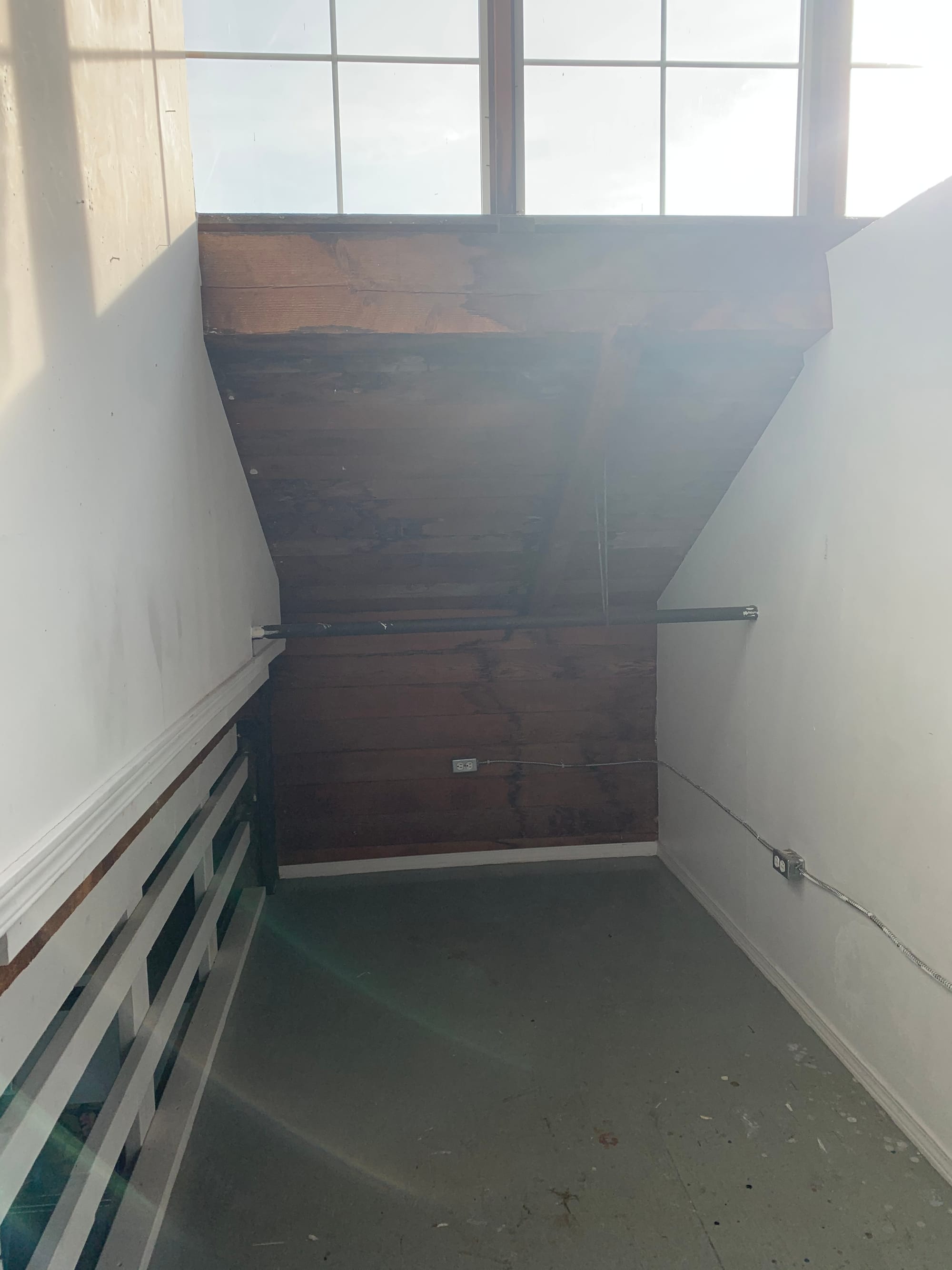
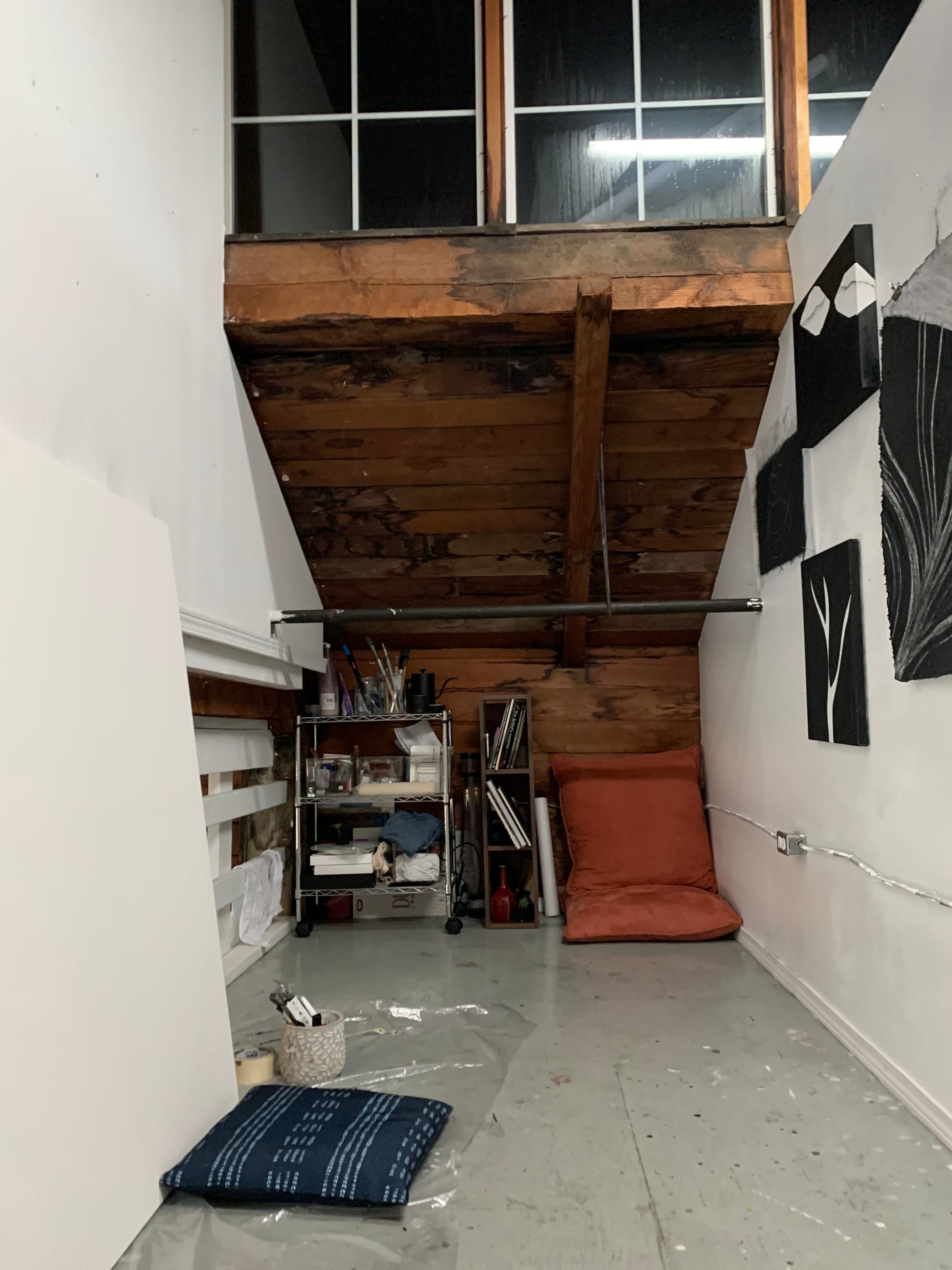
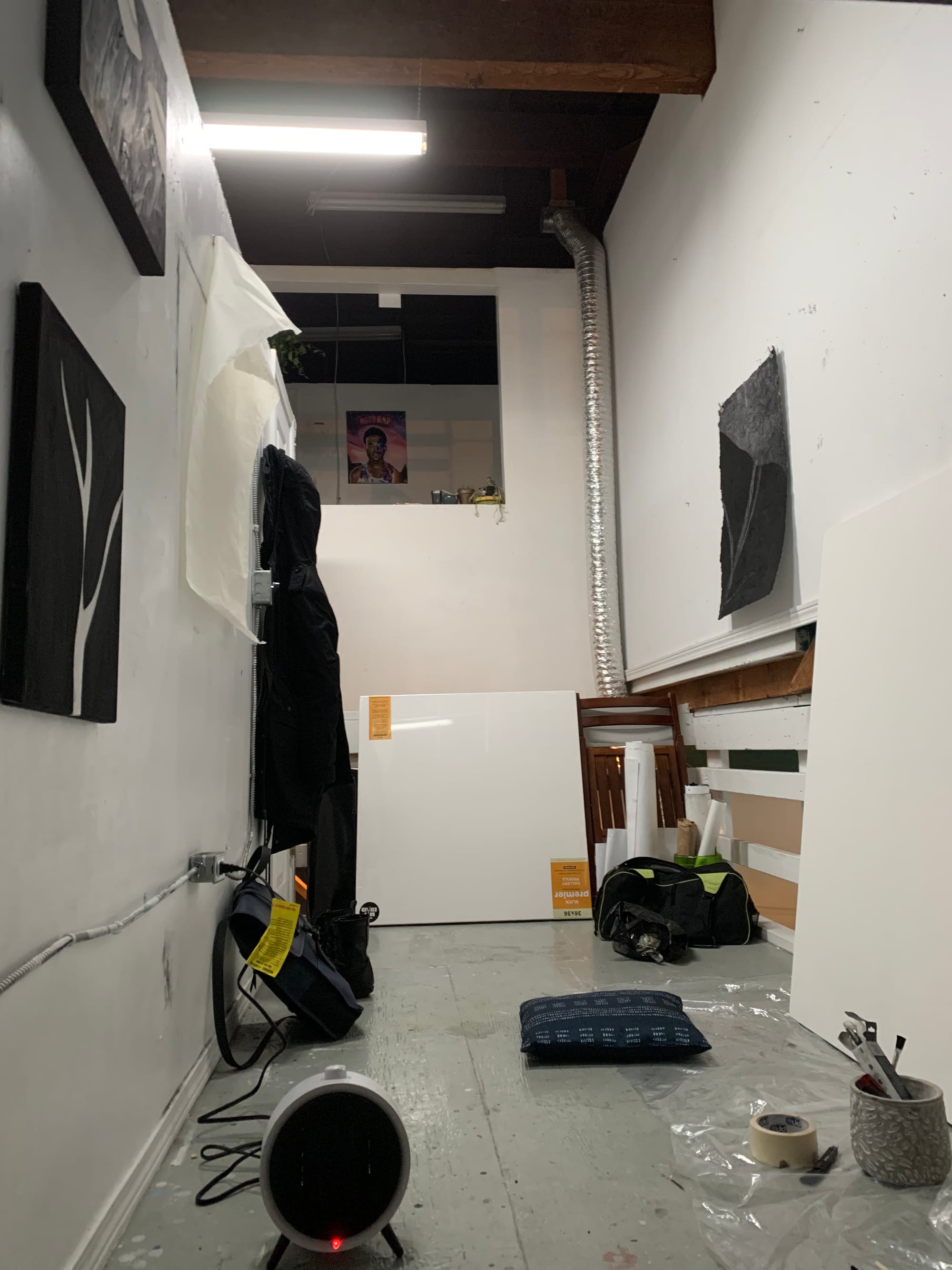
On the inside, the building was broken up into dedicated studios using drywall and wooden planks. The partitions were thin and nowhere near perfect, but the place had character, as they say. Some walls were incomplete, some were low, leaving the spaces on display. The particular studio that caught my eye had interesting walls; parts of it were exposed to other studios, but it had large windows on one side all the way up to the ceiling. To get to it, you needed to walk down a hallway, up some narrow stairs at the back of the building, and through another studio - yes, it was a railway-style studio. But once I saw the rays of sunshine coming in, I was sold.
I was working from my room and a dining table at the time, which was great for access, also limiting - I also don’t like the clutter in my living space. A designated space meant more room for larger works and a wider range of media. I had been exploring many ideas in sketchbooks and scrap paper that I wanted to explore. I didn’t have the freedom to fully flesh them out into larger, more complex studies, but the studio changed all that.
I wish I had taken more pictures of the interior of the space. I started working from home abruptly when the pandemic hit. Luckily, I had just moved to a new apartment by then and was working full-time. The building has since been torn down and replaced with a new structure - RIP. Ironically, the company I used to intern for now has offices in the new building. I’ve since changed jobs and moved on to several other art spaces, none as crickety as this one for sure.
That studio was a pivotal moment in my art practice; it changed my mindset and led to my first informal solo show. It was the first time I invested financially in an art studio; it was a great exercise in pursuing my creativity without limits and a lesson that remained even when I didn’t have a studio. I’m moving again. And I’m adopting a more transient lifestyle. Now, “studio” is any area carved out from the present. My tools are on me and can fit in a backpack or tote. A dedicated workspace for creativity is a gift. I’ve been fortunate to experience a range of them which I hope to document. It's however not essential to the practice the art continues always.